

ArticlesWebsite advice

What to Do When Your Website Form Stops Sending Email

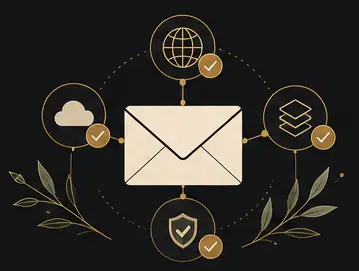
Illustration of reliable email infrastructure connected to cloud, security and delivery checks

A missing form notification does not necessarily mean the enquiry was lost. The form may have stored the submission successfully while the notification email was filtered, rejected or sent to the wrong address.

Do not keep submitting the form repeatedly

Make one controlled test using a recognisable name and email address. Note the time, the page and what confirmation appeared after submission. Repeated tests can create duplicate records and make email logs harder to interpret.

Check whether the website saved the entry

Many form plugins store submissions inside WordPress. If the test appears there, the form worked and the investigation can focus on notifications and delivery.

If there is no stored entry, check whether the form displayed a validation error, security challenge or server error.

Check the ordinary email causes

  • Look in Spam, Junk, Quarantine and focused-inbox folders.
  • Search for the subject line or website domain.
  • Confirm the notification recipient has not changed.
  • Check whether a mailbox rule moved or deleted the message.
  • Confirm the mailbox still exists and is not over quota.

Email delivery needs authentication

Reliable website email normally uses authenticated SMTP or a transactional email service. The domain’s SPF, DKIM and DMARC records help receiving systems decide whether the message is legitimate. A website can appear completely healthy while this delivery layer is failing.

Preserve the evidence

When reporting the problem, include the test time, form page, email recipient and any confirmation or error message. Do not include real customer data unless it is necessary.

What to include in the support request

  • The page containing the form.
  • The approximate submission time.
  • The expected recipient address.
  • Whether the entry exists in WordPress.
  • Whether other website emails are arriving.

With those details, support can compare the form entry, notification settings, SMTP log and receiving-mailbox response.

Prevent silent failures

Important forms should store entries as well as send email. Delivery logs and failure alerts are also valuable. For critical enquiries, periodic end-to-end testing is better than assuming that yesterday’s successful email proves today’s delivery.

The goal is not merely to make one message arrive. It is to create a pathway that can be monitored and diagnosed when something changes.

Need help with this?

Clients can open a secure support request and keep the conversation in one place.

Scroll to Top